


Why Your Dental Practice Has Plenty of Patients but Still Needs Reviews

Written by: Bera Niemczewski
The 30‑Second Answer
Your schedule might be packed, but that doesn’t mean your dental marketing can take a nap.
Reviews are your silent defense system. They help you stay visible, trustworthy, and ahead of the hungry practice down the street.
When reviews slow down, Google stops seeing momentum. Patients do too. Competitors start looking newer, more active, and easier to trust.
All it takes is one bad experience to knock things sideways.
A steady flow of good reviews pushes that noise to the bottom and keeps your story honest.
Strong reviews also filter out price shoppers. People who already trust you rarely lead with “how much does it cost?”
Search “dentist near me” right now and look at the top results. The ones earning clicks are usually the offices with a healthy mix of recent, detailed feedback. That consistency is what keeps them there.
“We’re Busy” Is Exactly Why You’re at Risk
Being busy feels safe. The phones are ringing, treatment rooms are full, and your team is juggling schedules like pros.
That’s exactly when most practices get blindsided.
Because “busy today” doesn’t guarantee “busy tomorrow.”
When review activity slows, Google starts showing other practices that look more active and trusted.
They might not be better dentists, just better at proving it online.
The first signs are quiet. Fewer implant consults. Fewer families finding you through Maps. More price shoppers asking about “what insurance you take” instead of “can you help me with this problem.”
It happens slowly until it doesn’t.
Your timeline goes from “fully booked” to “visibility softening” to “scramble mode” before you even realize why.
Keeping reviews coming is how you protect the demand you’ve already earned.
Reviews Protect What You Already Built
You worked hard to earn your reputation. Years of care, trust, and great results can slip fast if one bad review becomes the first thing people see.
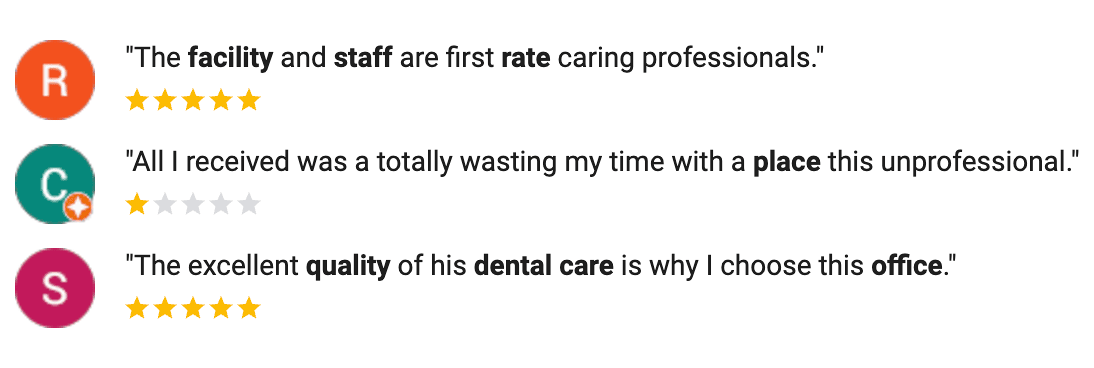
That’s why reviews protect what you’ve built. Think of them as reputation insurance.
A single negative post can shape a stranger’s impression more than a dozen quiet wins.
But when new reviews keep coming in, that one bad moment fades into context. Your practice looks steady, active, and trustworthy.
People rarely expect flawless. They just look for signs of consistency. A stream of fresh feedback tells them your care is reliable today, not just back in 2022.
When you keep collecting genuine reviews, you control the story patients read. You stay visible, accurate, and human.
Competitor Pressure Is Real (and It Shows Up First in Google Maps)
Open Google Maps and type “dentist near me.” You see the fight?
Patients rarely read your mission statement or scroll through your About page. They make decisions right there in the Map Pack.
They glance at your stars, skim how many reviews you have, and check the dates on the latest ones. Some even notice if you reply or not.
It takes them less than ten seconds to judge who looks trustworthy.
That’s the quiet pressure most dentists miss. You can deliver top-tier clinical care, but if your competitor has newer, more active reviews, they win the click before you get a chance.
What Happens When a Competitor Starts Collecting Reviews Weekly
It doesn’t take much for another practice to start looking busier than you online.
When a competitor gathers new reviews every week, Google notices. They start showing up more often in Maps results, even if their office is a few miles farther away.
That small difference can pull in all kinds of valuable searches: people moving to the area, or patients with urgent needs who just go with whoever looks most trusted in the moment.
Fresh reviews also help them win high‑trust procedures like implants, veneers, or sedation. To patients, recency feels like reliability.
If their page looks more active than yours, they get the click first.
It’s that simple.
The 5 Review Signals That Matter in 2026 (Simple Checklist)
Google's ranking factors evolve fast, but the fundamentals of trust don't.
Here's what the algorithm and your future patients care about most this year.
1) Recency (Are You Getting Reviews This Month?)
Old reviews age like milk (good news if you have a few negative ones).
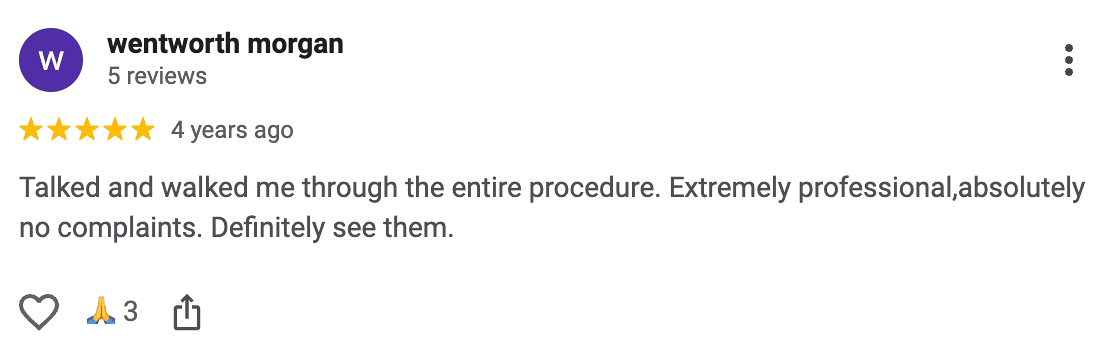
Patients scanning your profile want signs that people love you right now.
If someone's last review was from 2022, it makes your practice look quiet. Even if you're busier than ever.
A steady trickle of fresh reviews tells Google and new patients that your office is active, trusted, and relevant today.
2) Consistency (Small Weekly > Big Bursts)
Google reads patterns.
A burst of ten reviews followed by months of silence looks unnatural. Two or three per week is far stronger and simpler to maintain.
The rhythm matters more than the volume.
3) Content (Do Patients Mention the Right Services?)
A five-star rating is good.
A patient casually mentioning "implant," "Invisalign," or "emergency visit" is gold.
(I will be forever talking about descriptive reviews!)
When those words appear naturally inside real reviews, Google connects them to your business and expands your search visibility around them.
That means you can quietly grow higher-value services without extra ad spend. Just more accurate storytelling from your patients.
If your priority is cosmetic dentistry, like this Queens practice, and yet your Google review mentions are:
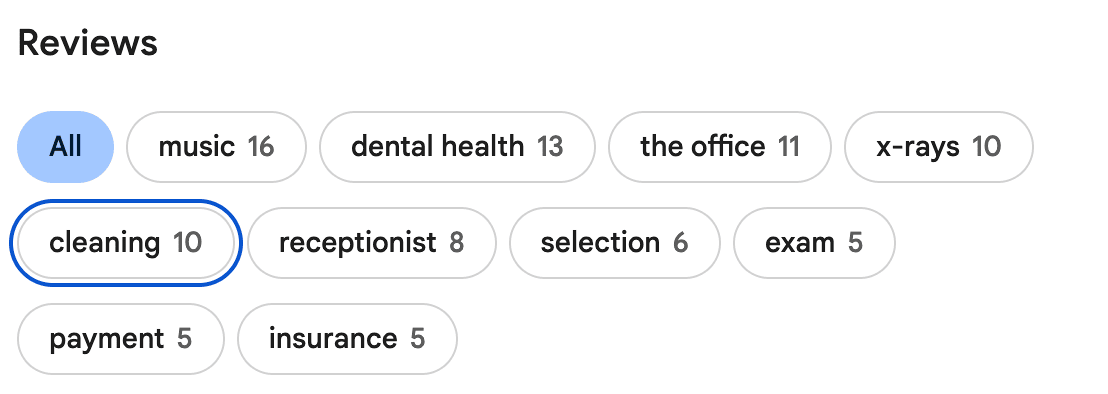
… no wonder why you might be hidden way below in the already saturated dental market of NYC.
There are ZERO mentions of Invisalign, veneers, or any other high-value treatments.
In comparison, here is another practice. Notice the Invisalign or dental implant mentions:
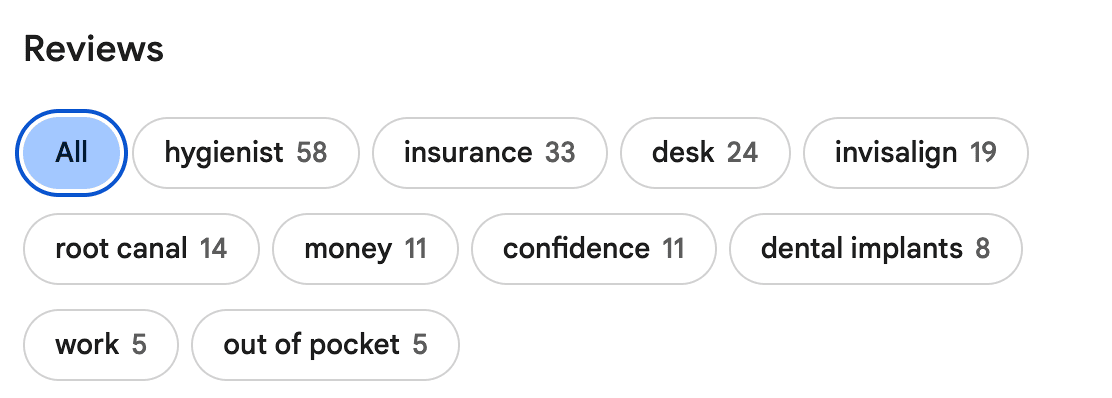
Guess where they show in Map Pack?
4) Sentiment Spread (Beyond "Nice Staff")
Friendly staff should be the standard by now.
The best reviews go deeper: they include relief, reassurance, and results.
Phrases like "finally pain-free," "felt safe with sedation," or "they fixed my old crown perfectly" carry emotional weight and clinical credibility.
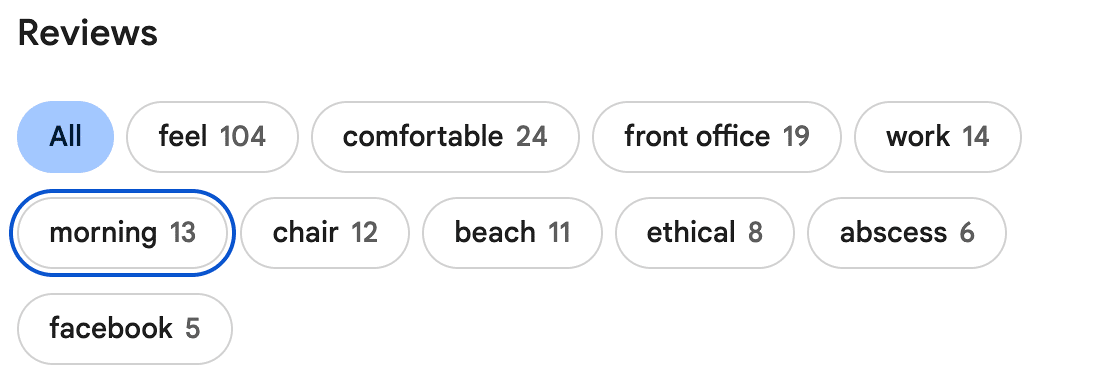
Here is Smiles Cafe Dentistry (Huntington Beach, CA), and they do it really well.
Notice how many times patients mention the word “feel” or “comfortable”:
And the actual reviews:
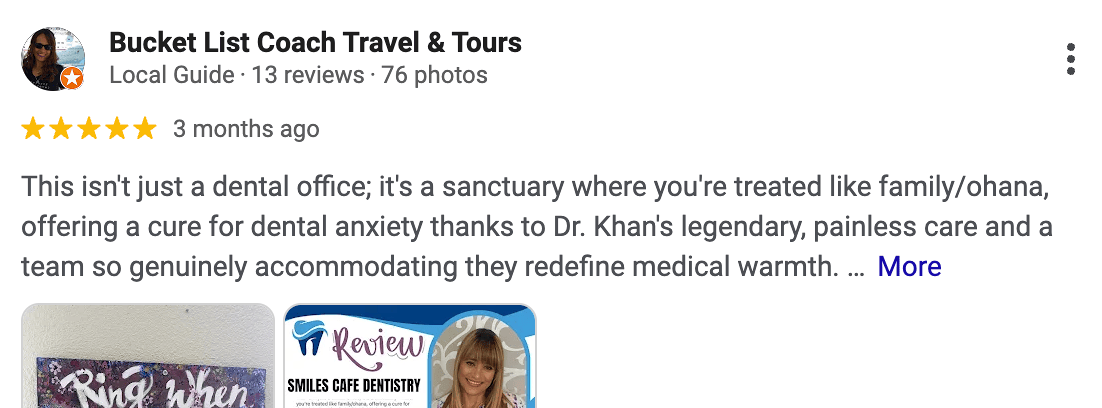
That balance tells searchers they can trust you with something that matters. Something more than a cleaning.
5) Response Rate (Patients Notice if You Reply)
A review without a response is a conversation left hanging (don’t do it).
Like here:
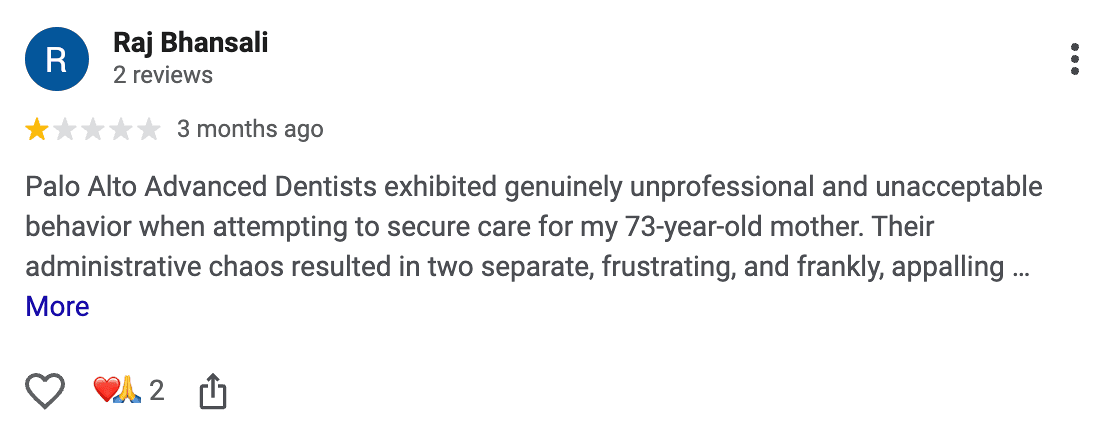
When you reply, even briefly, patients see professionalism, attention, and humanity. Also, every stick has two ends, and patients know it as long as you acknowledge any negative reviews.
You can do so without breaking confidentiality.
Google sees engagement and freshness when you reply to all reviews.
It's reputation hygiene: respond to every review within 48 hours, even if it's just "Thanks for trusting us!"
A Review System That Doesn't Feel Pushy (Retention-Friendly)
The best review systems feel invisible to patients and simple for your team.
You're asking for feedback, but you're doing it at moments when patients already feel grateful.
Ask at the Right Moment (3 "Easy Yes" Moments)
Timing turns a request into a natural conversation.
Here are the three moments when patients are most likely to say yes without hesitation.
After a compliment:
When a patient says something like "That was so much easier than I thought" or "You guys are amazing," they've already decided you're worth talking about.
That's your cue.
Just say: "Thank you. Would you mind sharing that in a quick Google review?"
After a successful first visit (new patient wins):
New patients who had a great experience are still excited.
They haven't settled into a routine yet. The relief or surprise is fresh.
If the appointment went well, they're primed to tell someone about it.
Ask before they leave (preferable) or send a text within an hour.
After a case milestone (clear aligners progress, crown delivered, pain resolved):
By the time you’re finishing your case, chances are you’ve already built a relationship with the patient.
Patients remember breakthroughs.
● The day the crown finally feels right.
● The moment they see their aligner results.
● The first morning they wake up without tooth pain.
These are emotional wins, and people want to share wins.
Ask them while they're still in that moment.
The Front Desk One-Liner (Copy/Paste)
Your front desk team needs something they can say comfortably, every time, without sounding scripted or salesy.
This line works because it's honest, short, and easy to remember.
"If today went well, would you be open to leaving us a quick Google review? It really helps local families find a dentist they can trust."
Why it works:
● It gives the patient an out ("if today went well").
● It frames the request as helpful to others, which feels less selfish.
● It takes five seconds to say and doesn't interrupt checkout flow.
Your team can say this while handing back a card, closing out the appointment, or walking someone to the door.
The Text Message Script (Copy/Paste)
Not every patient will leave a review at the desk.
That's fine.
A follow-up text an hour or two later gives them a second chance without any awkwardness.
"Hi [First Name], thanks for visiting us today. If you have 30 seconds, would you leave a Google review? It helps other patients feel confident choosing us. [Link]"
Why it works:
● It's personal but short.
● It respects their time ("30 seconds").
● The link removes friction. One tap and they're there.
● It connects the review to helping others, which makes people more likely to follow through.
Send this from your practice management system, texting platform, or even manually if your schedule is light.
The key is speed. Send it the same day, while the visit is still top of mind.
The "QR Code" Placement That Works (Without Being Awkward)
QR codes only work if patients actually see them and feel invited to scan.
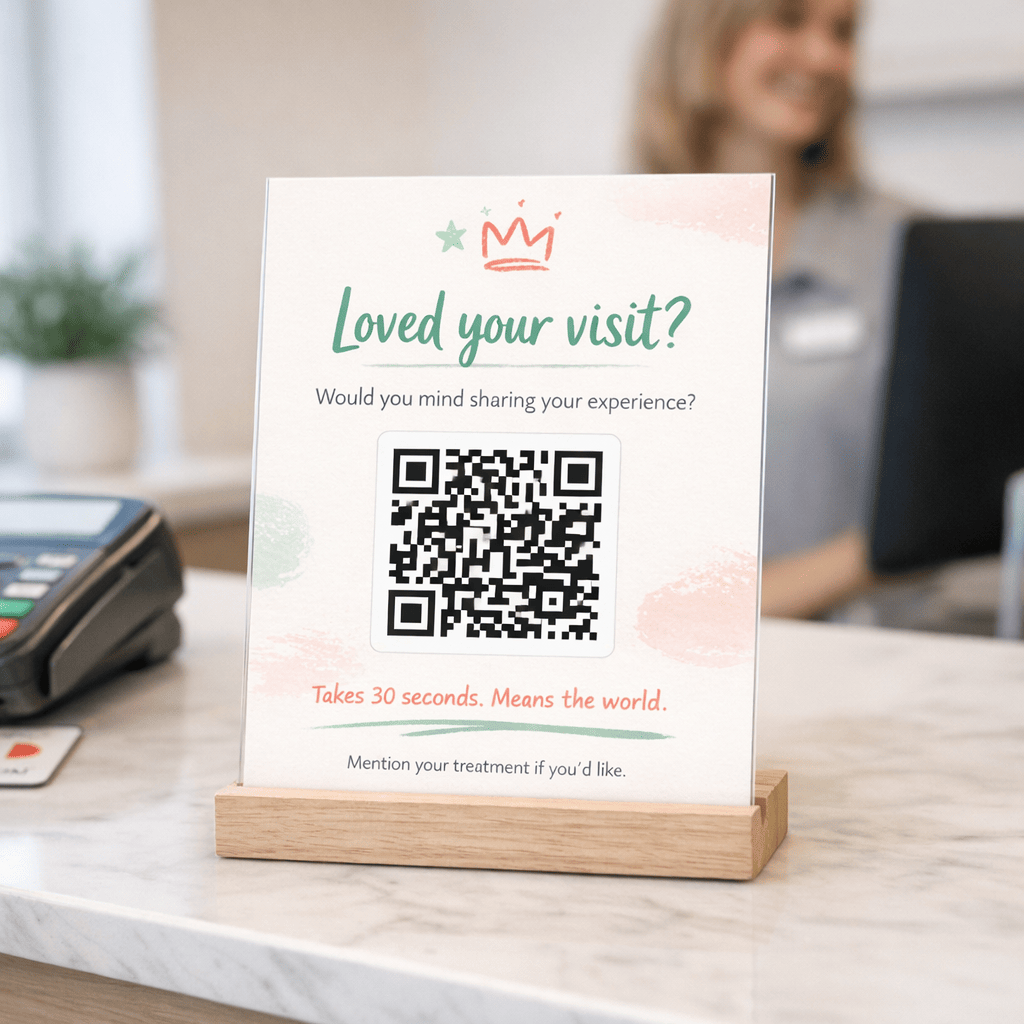
Put them in places where people naturally pause, and pair them with a short, human message.
Checkout counter: "How did we do today?"
This is where patients are already wrapping up, grabbing their next appointment card, and mentally shifting gears.
A small sign with a QR code and that simple question feels like a natural check-in.
Keep it small, clean, and facing the patient while they wait.
Hygiene room: "Help another patient feel less anxious."
This one hits different.
Patients who just had a great cleaning or painless procedure know what dental anxiety feels like.
Just say: "Thank you. Would you mind sharing that in a quick Google review?"
Framing the ask as helping someone else through that same fear makes it feel generous instead of transactional.
Place it on the counter near the sink or next to the exit door where they'll see it on the way out.
What to Do When You Get a Negative Review (Without Making It Worse)
A bad review stings.
Your first instinct might be to defend yourself, explain what really happened, or ignore it completely.
All three make it worse.
The truth is, most people reading a negative review are watching how you respond.
A calm, professional reply can turn a damaging moment into proof that you care about getting things right.
The 4-Step Response Framework (HIPAA-Safe)
This framework keeps you professional, compliant, and human.
Use it every time, no matter how unfair the review feels.
1. Thank them for the feedback
Even if the review is harsh or inaccurate, start with gratitude.
"Thank you for taking the time to share your experience."
Like this practice based in Austin:
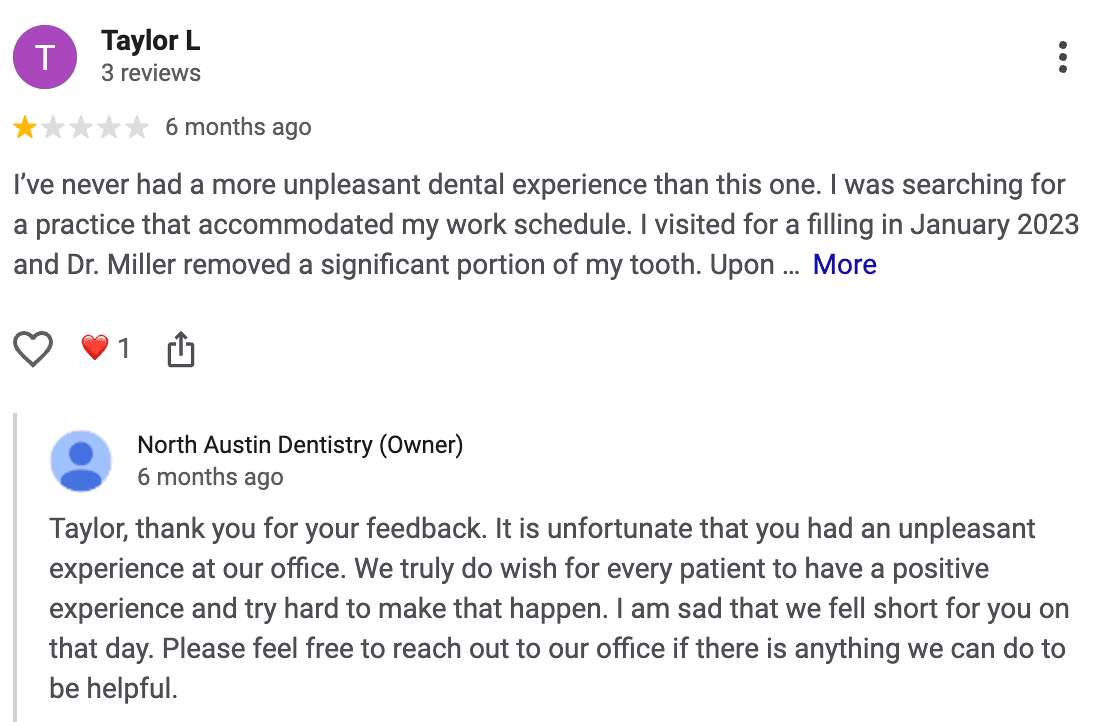
It shows maturity and sets a respectful tone for everything that follows.
2. Acknowledge the concern generally (no patient details)
You can validate their feelings without confirming who they are or what happened.
"We're sorry to hear your visit didn't meet expectations."
Keep it vague. HIPAA applies to public responses too.
3. Invite them offline to resolve
Show you want to make it right, but do it privately.
"We'd like to understand more and see how we can help. Please reach out to us directly at [phone or email]."
This moves the conversation out of the public eye and gives you a chance to actually fix things.
4. Show you have standards ("We take this seriously")
End with a line that reassures future readers.
"We take every concern seriously and are committed to providing excellent care."
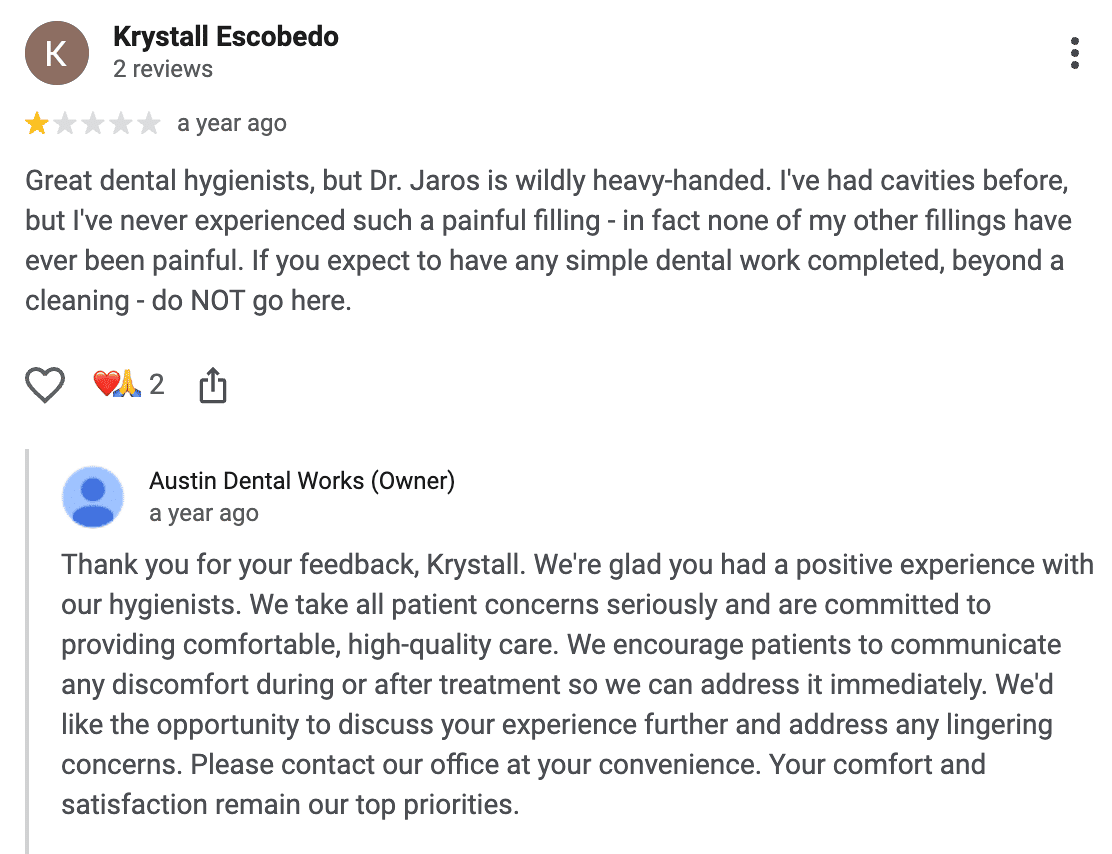
This isn't just for the reviewer. It's for the hundred people who will read this response later.
Turn Negatives Into Retention Opportunities
A negative review feels like a loss, but it's actually a chance to prove what kind of practice you run.
How you respond can save the relationship and strengthen your reputation at the same time.
Fast follow-up means you often keep the patient
Most patients who leave a bad review are frustrated, but they're still reachable.
If you respond publicly within 24 hours and follow up privately within 48, you show urgency and care.
That alone can flip the situation.
Patients who feel heard often update or remove their review. Some even become your biggest advocates because you took them seriously when things went wrong.
Speed is everything here. The longer you wait, the harder it gets to repair.
And those that do not bend or are unreasonable? You might dodge a bullet by letting them go.
A calm response builds trust with everyone watching
Here's what most dentists miss: the reviewer might never come back, but dozens of future patients are reading your reply.
When they see a composed, empathetic response instead of defensiveness or silence, they think "This practice handles problems like adults."
That's the kind of trust you can't buy with ads.
A single well-handled negative review can actually make you look more trustworthy than a page full of five-star ratings with no responses (and I am shocked at how many reputable dental offices ignore negative reviews).
How to Track Review Health Without Living in Google All Day
You can't improve what you don't measure, but you also can't run a practice while obsessing over every star rating.
The goal is a simple weekly check-in that takes five minutes and tells you everything you need to know.
Track These 4 Numbers Weekly (Not Vanity Metrics)
Forget total review count or overall star average.
Those don't tell you if things are getting better or worse right now.
Focus on these four instead.
1. New reviews this week
This is your momentum indicator.
If you're consistently getting two to four reviews per week, your system is working.
If you go two weeks with nothing, something broke.
Maybe your team stopped asking, maybe the text link isn't sending, or maybe you're only asking certain types of patients.
Track it weekly so you can catch problems early.
2. Average rating trend
Look at the last 30 days compared to the previous 30.
Is it holding steady? Climbing? Dipping?
A slow decline means something shifted in the patient experience, even if your schedule still looks full.
Catch it now before it becomes a bigger problem later.
3. Response time (goal: under 48 hours)
Patients notice when you reply quickly. So does Google.
Track how long it takes you to respond to each review, good or bad.
If you're consistently over 48 hours, you need to reassign ownership or set up alerts.
4. "Service mentions" count (implants, emergency, kids, Invisalign, etc.)
Count how many times your key services get mentioned in reviews each month.
This tells you what people associate with your practice and what Google connects to your name.
If you want to grow implants but nobody mentions them in reviews, you need to adjust who you're asking and when.
Assign an Owner (So It Doesn't Die)
Front desk owns: asking & sending link
They're already at checkout.
They already talk to every patient.
Make it part of the goodbye process, just like scheduling the next appointment.
Give them the one-liner script and the texting template. Even better if they’re natural.
That's it.
Office manager owns: weekly tracking
Someone needs to pull the numbers every Monday and share them with the team.
A quick Slack message or printed sheet in the break room works.
This keeps everyone aware and accountable without micromanaging.
Doctor owns: occasional personal thank-you replies (high impact)
You don't need to reply to every review, but when a patient mentions you by name or talks about a complex case, reply personally.
It takes 30 seconds and has outsized emotional impact.
Patients screenshot those replies. They show their families. It reinforces loyalty in a way automation can't touch.
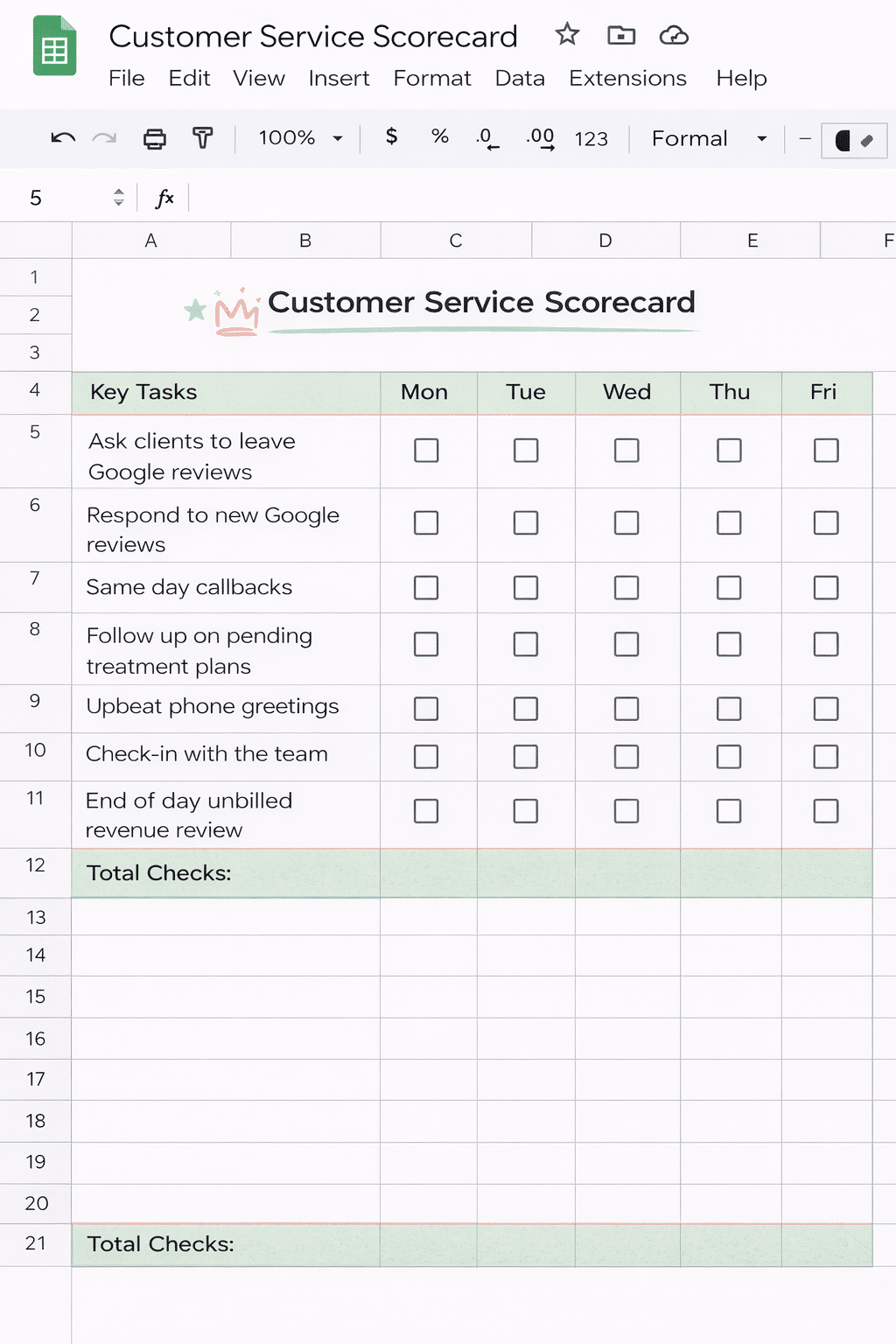
If you want a simple KPI rhythm for ownership and accountability, pair it with dental team performance KPIs.
Busy Isn’t Protection. Your Reputation Is.
If you want reviews to feel steady instead of sporadic, they need to live inside a system.
Not a once-a-month reminder.
Not a “hey, can someone ask for reviews this week?” moment.
A real rhythm your team follows without thinking twice.
That’s what a brand defense approach does.
● It builds consistent review growth.
● It sets clear response standards.
● It assigns ownership so nothing slips.
● It protects the reputation you’ve already worked years to earn.
When reviews become predictable, everything else stabilizes.
● Your Map visibility stays strong.
● Your first impression stays current.
● Your competitors have a harder time outranking you just because they look more active online.
Inside our flagship dental marketing system, reputation management is no longer a side task. Not in 2026.
Reputation management is part of how we protect growth long term.
And because reviews directly influence visibility and click-through in Google Maps, they naturally connect to smart SEO for dentists. It’s all the same ecosystem.
You don’t need more patients tomorrow.
You need to protect the ones you’ll want six months from now.
That starts with making sure your online reputation reflects the level of care you’re already delivering every day.
FAQs
We're already busy, so why invite more demand?
Because busy today doesn't guarantee busy tomorrow. Reviews protect the demand you've already built. They keep you visible when competitors start showing up more often in Maps. They filter out price shoppers and attract patients who already trust you before they call. More reviews means better patients, not just more patients.
What if I don't want to bother patients?
You're not bothering them. You're giving happy patients a way to help others who feel anxious about finding a dentist they can trust. Most people are happy to leave a review if you ask at the right moment. The ones who say no will just say no. It's never as awkward as you think.
What if we get a bad review?
You probably will eventually. Every practice does. The key is responding fast, staying calm, and showing you take concerns seriously. A well-handled negative review actually builds more trust than a page full of perfect scores with no replies. Fresh positive reviews also push old complaints further down the page.
Is it okay to offer incentives?
Keep it simple. Ask consistently, but don't pay for reviews. Google's terms prohibit offering discounts, gift cards, or prizes in exchange for feedback. You can thank patients who leave reviews, but the ask should always be genuine and voluntary. Consistency beats incentives every time.
Ready to build a marketing growth machine?
Let's create momentum that lasts.
Book your strategy session with 1flowww.
Book Your Free Consultation