

8 Things Dental Practices Must Fix in 2026 as AI Changes How Patients Choose Dentists

Written by: Bera Niemczewski
AI Is Changing Dental Patient Choice: 8 Fixes for 2026
Lately, I've noticed a shift in how patients choose dentists.
They decide faster.
Often before clicking a website.
Search is becoming answer-first. AI summaries. Map results. Review highlights.
Patients scan, compare, and move on.
The research phase is shorter.
So is patience.
That is why a practice's digital trust layer now does the selling.
Google Business Profiles, reviews, and clear service explanations shape decisions before a homepage ever loads.
I work on growth, branding, and marketing with dental practices across the U.S. My guide breaks down 8 fixes practices need to make in 2026 to stay visible, trusted, and bookable as AI reshapes search.I work on growth, branding, and marketing with dental practices across the U.S. My guide breaks down 8 fixes practices need to make in 2026 to stay visible, trusted, and bookable as AI reshapes search.
Most practices get this backwards
They focus on driving more traffic before fixing clarity and trust. In 2026, more traffic does not help if patients cannot quickly understand why they should choose you.
What's changing in how patients choose dentists
Patients do not research the way they used to.
The shortlist now happens earlier. Often inside Google Maps. Or inside an AI summary. Or after scanning a few review highlights.
By the time someone clicks a website, they usually already know who they are calling.
Most of the comparison happens fast. And it happens outside your site.
Patients are researching differently and deciding faster
Patients are not reading long explanations. They are scanning for signals.
Maps results, like this:
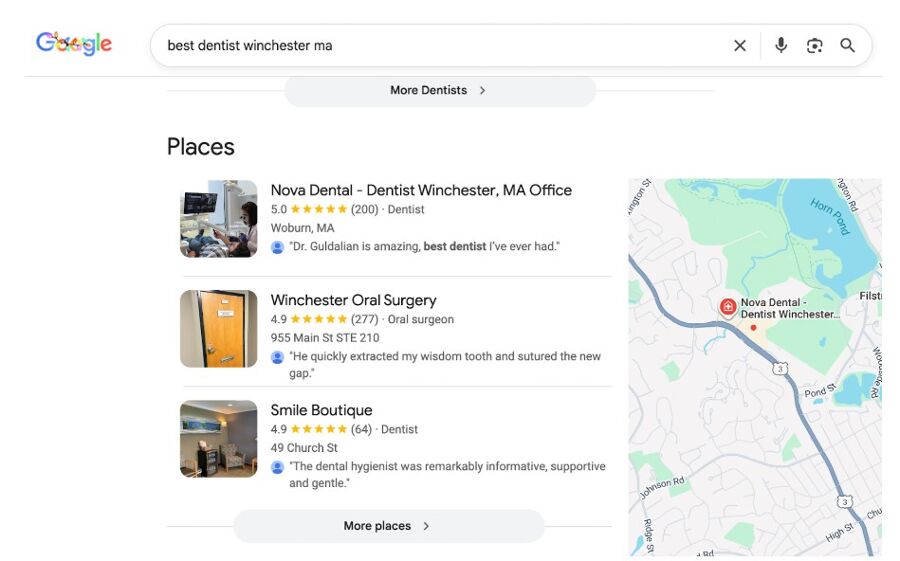
Star ratings:
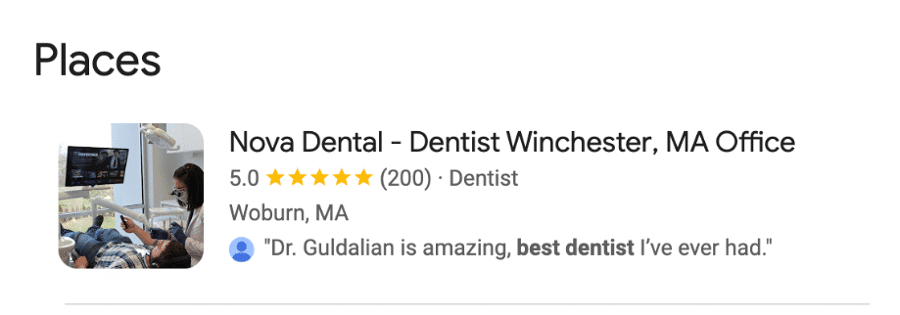
Recent reviews.
Clear answers to simple questions. You get it.
That is enough to narrow the list.
What they compare has changed too.
It is no longer just about procedures or technology. Patients compare comfort, clarity, and convenience.
- Do they seem calm and organized?
- Do they explain things clearly?
- Is it easy to book, call, or get help?
Those answers often matter more than what services are listed on the homepage.
The new decision layer is summary-driven
A quick reality check
If a patient has to click around to figure out what you do or whether you are a good fit, they will not. Someone else will make it easier.
Patients are not piecing together information from ten different tabs.
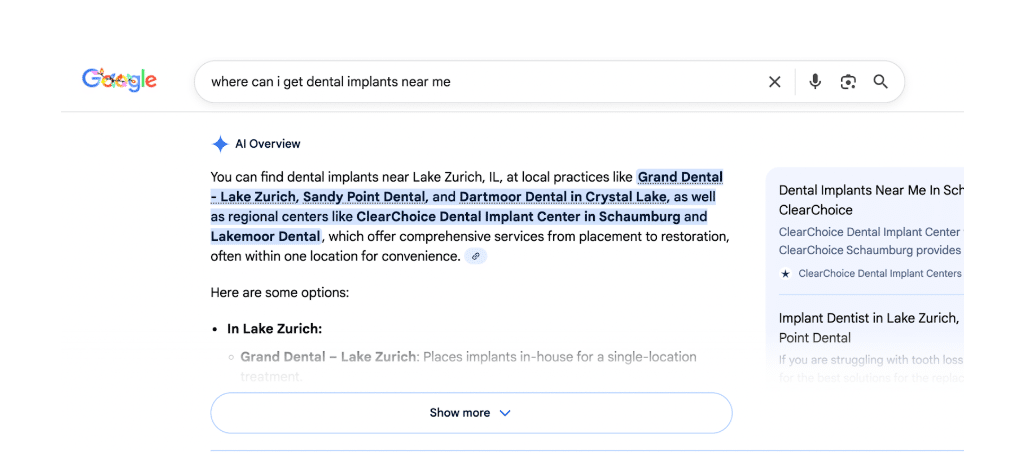
They are reading summaries, like these:
And these (hint: here's your next blog post topic):
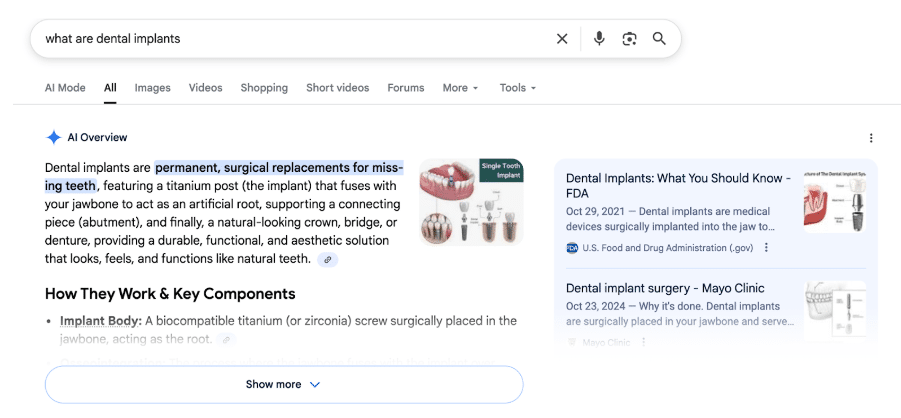
AI Overviews condense options into a few lines. Google Maps highlights reputation patterns pulled from reviews. Both are designed to save time.
For many patients, that is enough.
They do not need to visit every website. They do not want to compare every detail.
They want a quick sense of who feels trustworthy and easy to work with.
Once that decision feels clear, they act.
This is why visibility today is less about ranking everywhere and more about showing up clearly in the places where decisions happen.
The business impact
Fewer website clicks do not mean fewer opportunities.
They mean the first impression has moved.
It now lives across Google, reviews, and content snippets. Not just your homepage.
Patients form an opinion before they ever meet you. Sometimes, before they ever visit your site.
That makes clarity and consistency critical.
If the information patients see is incomplete, outdated, or confusing, trust drops fast.
Reality check:
Your practice might be excellent clinically. But online, AI and patients can only trust what they can see.
What AI surfaces tend to prioritize when showing dentists
AI looks for signals it can understand and trust.
When information is clear and consistent, it is easier to surface. When it is messy or vague, it gets skipped.
That is the why behind every fix in this guide.
Clarity and structure
AI favors information that is easy to extract and easy to understand.
That usually means:
- Clean service explanations written in plain language
- Scannable FAQs that answer real patient questions
- Clear location and provider information that matches everywhere online
If a system has to guess what you do, where you are, or who provides care, it will move on.
The same is true for patients.
Clarity helps both.
Trust signals matter more in healthcare
Dentistry is not a casual purchase.
Patients want proof before they commit. So do AI systems.
That proof comes from credentials, experience, and transparency.
Who is providing care. How long they have been practicing. What patients can expect.
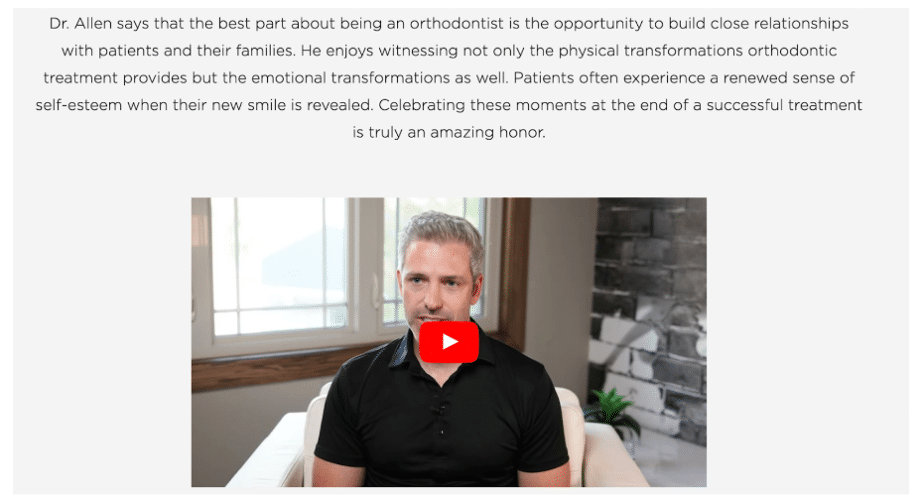
Consistency matters just as much.
Your practice name, providers, services, and details need to match across your website, Google, and every directory where patients find you.
When trust signals are clear and consistent, confidence goes up.
When they are missing or conflicting, both AI and patients hesitate.
Reputation patterns matter more than star ratings
What I see working right now
Practices that win are not doing more marketing. They are removing friction. Clear service pages, active Google profiles, and consistent review themes outperform almost everything else.
This is something I see practices miss all the time.
When I look at reviews, I am not focused on the star rating first. I read the words. I look for what keeps coming up.
Are patients mentioning how they were treated. Do they talk about feeling rushed or listened to. Do they mention the front desk, the explanations, the follow-up.
Those repeated details are what shape trust.
Recency matters too. A long gap in reviews raises questions, even if the rating is high. So does silence when someone leaves a concern.
Responses matter more than most practices realize.
When I see a practice respond calmly and thoughtfully, it tells me how they handle problems in real life.
Patients pick up on that. AI systems do too.
I don't think AI is replacing dental marketing. I think it is forcing practices to be more honest and more consistent about how they show up.I don't think AI is replacing dental marketing. I think it is forcing practices to be more honest and more consistent about how they show up.
That shift favors practices that treat reputation as part of the patient experience rather than an afterthought.
The 8 fixes dental practices must make in 2026
Everything you've read so far leads here.
AI is changing how patients find, compare, and choose dentists. But the fixes are not complicated. They are practical. And they are very doable.
Each fix below focuses on one thing. Trust, visibility, or clarity. In most cases, all three.
To keep this useful, I use the same structure for every fix:
- Why it matters in 2026
- What to change
- A quick win you can do this week
- How to measure if it's working
You do not need to do all eight at once. Most practices see momentum after fixing just one or two.
Let's start with the first one.
Fix #1: Turn every service page into a patient decision page
Why it matters in 2026
Patients and AI both reward clarity. A list of procedures does not help someone decide. Decision support does.
If a page does not answer the questions patients are already asking, they move on.
What to change
- Add who it is for and who it is not for
- Explain what it feels like, including anxiety support, pain management, or sedation options
- Lay out what to expect, step by step, in plain language
- Include pricing context, such as ranges, financing options, and what affects cost
- Add 8 to 12 patient FAQs, written the way real people ask them
Quick win this week:
Add a short FAQ section to your top two revenue pages, like implants, Invisalign, emergency care, or cosmetic dentistry.
Like this:
How to measure
- Calls and appointments coming from those pages
- Scroll depth and time on page
- Conversion rate, including form submissions and click-to-call
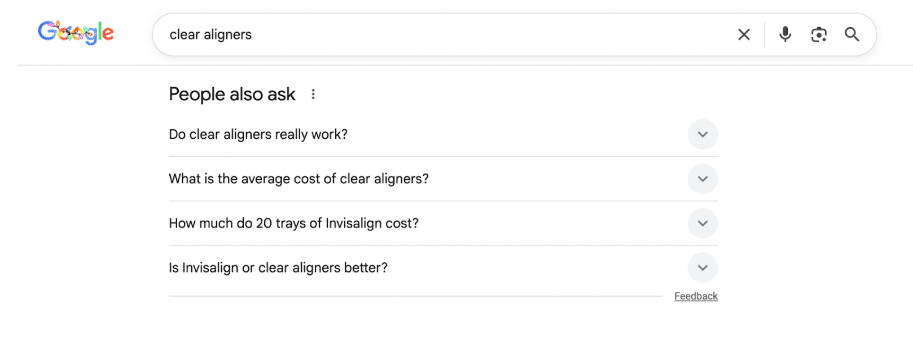
Tip: Use Google's People Also Ask for actual questions patients are searching for, like for this search result on clear aligners:
Fix #2: Treat your Google Business Profile like your real homepage
Why it matters in 2026
I'm not saying your website isn't important. In fact, I'd be doing myself a disservice. And you. It is extremely important because without it, Google has little to work with.
But…
For many patients, Google Business Profile is the first and last stop. It is where trust is formed and decisions are made.
If that page is incomplete or outdated, patients move on.
Something I tell every practice owner
Your website is no longer the decision-maker. It is one part of a larger trust system that includes Google, reviews, and how you respond when things go wrong.
What to change
- Make sure name, address, and phone number are correct and consistent
- Choose the right primary and secondary categories
- List services clearly, not just broad procedures
- Upload current photos of the team, office, and exterior signage
- Use posts and updates to show activity and availability
- Add and answer common patient questions in the Q&A section
Quick win this week
Upload 10 to 15 recent photos, like this New York dentist:

And update your services list.
How to measure
- Calls and direction requests from Google
- Map impressions for priority services
- Appointments that mention finding you on Google
Fix #3: Build a review strategy designed for AI summaries
Why it matters in 2026
AI summaries compress your reputation into a few lines. What patients keep saying becomes your brand.
If those themes are unclear or inconsistent, trust drops fast.
What to change
- Train your team to ask for reviews at the right moments, after comfort wins, clear explanations, or fear reduction
- Use a light prompt that encourages specifics without scripting or pressure
- Watch for recurring phrases in reviews and reinforce the ones you want patients to notice
Quick win this week
Create a two-sentence review request that nudges specificity, such as what helped someone decide or what stood out about their visit.
How to measure
- Review velocity, measured as new reviews per week
- Percentage of reviews mentioning key themes like gentle care, clear explanations, being on time, or transparency
- Conversion rate from Maps, including calls and bookings
Recommended reading: How to Improve Dental Team PerformanceRecommended reading: How to Improve Dental Team Performance
Fix #4: Respond to every review like it is part of the patient experience
Why it matters in 2026
Reviews are not just feedback. They are public signals.
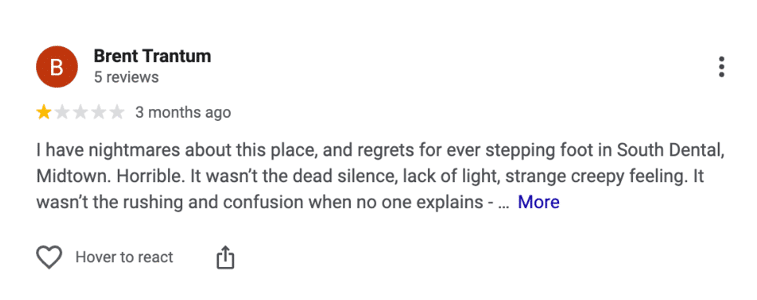
Patients read them to understand how a practice handles people, especially when something goes wrong.
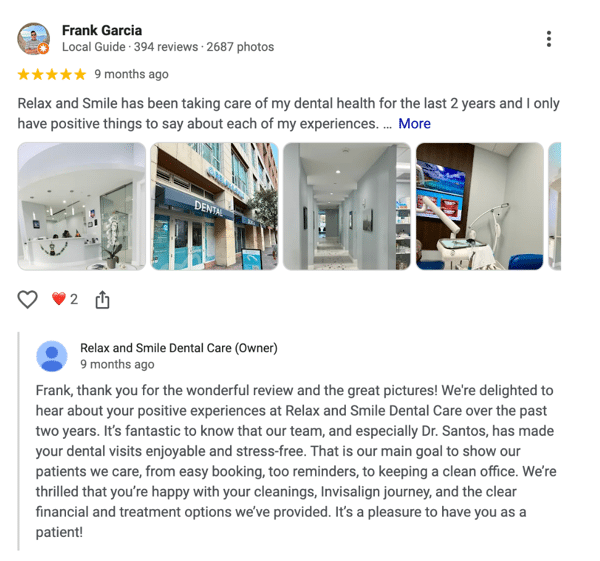
Respond to positive reviews, like this Miami dental practice:Respond to positive reviews, like this Miami dental practice:
And to those negative or semi-negative ones too, like here:
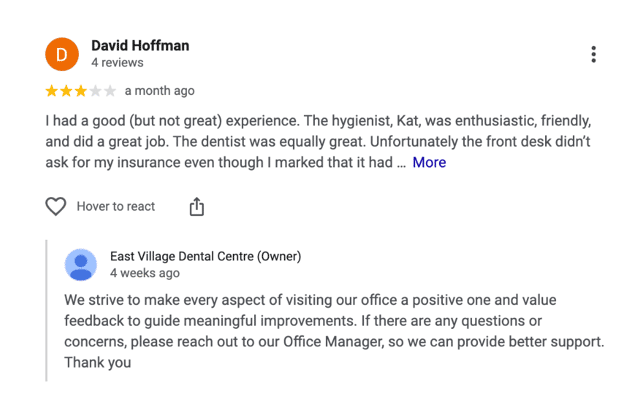
And here:
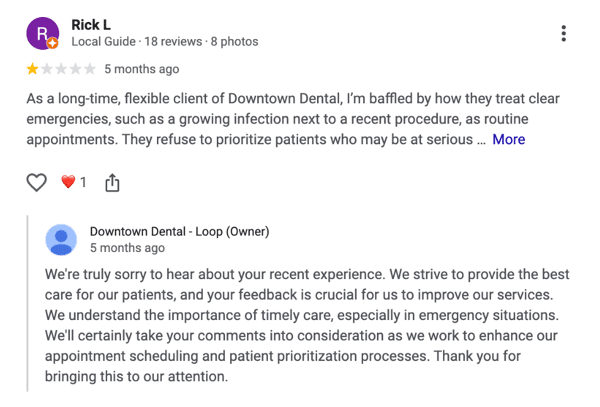
Certainly, don't leave things unfinished like this practice:
What to change
- Respond to every review, positive or negative
- Keep responses calm, human, and professional
- Acknowledge concerns without defensiveness
- Move sensitive issues offline, but show accountability publicly
Quick win this week
Write five response templates your team can reuse and personalize. Need help? Reach out and I'll prep some for you.
How to measure
- Response rate and response time
- Sentiment trends in new reviews
- Fewer trust-related objections during calls or consultations
Fix #5: Eliminate inconsistencies across the web
Why it matters in 2026
When information does not match, trust drops. Patients notice it. AI notices it.
Even small inconsistencies can slow decisions or send people elsewhere.
What to change
- Make sure your practice name, address, and phone number match everywhere
- Check suite numbers, abbreviations, and formatting for consistency
- Confirm providers are listed correctly across directories
- Update outdated profiles on insurance sites and dental platforms
- Remove duplicate or abandoned listings
Quick win this week
Fix the top 5 listings that show up when you search your practice name
How to measure
- Branded search conversions
- Fewer wrong-number or wrong-location calls
- More stable Map visibility for core services
This is where growth actually comes from
When patients feel confident before they call, conversations get easier. Case acceptance improves. And marketing stops feeling like a guessing game.
Fix #6: Make trust signals impossible to miss
Why it matters in 2026
Patients are choosing a healthcare provider. They want reassurance before they commit.
If credentials, experience, or expectations are unclear, hesitation creeps in.
What to change
- Clearly show who provides care on every major page
- Expand doctor and team bios with experience, focus areas, and approach
- Explain how you handle anxiety, comfort, and communication
- Be upfront about policies, including insurance, financing, and emergencies
- Add proof where appropriate, such as case examples or patient stories
Quick win this week
Update your About page and add one section focused on how you support anxious or hesitant patients
How to measure
- Consult-to-treatment acceptance rate
- Higher-value case starts
- Fewer price-only inquiries
Fix #7: Optimize for answers without clicks
Why it matters in 2026
I see this mistake all the time.
Practices still think the goal is getting someone to the website. That is no longer the whole game.
Patients often decide without clicking. They read a summary. They scan Maps. They glance at reviews. Then they call.
If you are not clear in those moments, you lose the opportunity before it even reaches your site.
What to change
- Answer real patient questions where decisions happen (and not just on your homepage)
- Make sure your Google Business Profile Q&A is filled with useful, accurate answers
- Use clear language that matches how patients actually search and speak
- Repeat your core message consistently across Google, reviews, and key pages
Quick win this week
Write answers to the 10 questions your front desk hears most often and publish them on your site and in Google Q&A
How to measure
- Increase in calls and bookings from Google
- More branded searches, where patients look you up by name
- Shorter decision cycles, fewer "just researching" inquiries
Fix #8: Measure what actually turns into patients
Why it matters in 2026
I see practices tracking clicks, rankings, and impressions, then wondering why growth feels flat.
Those numbers do not tell you WHO actually booked. What matters is what turns into a real patient.
What to change
- Track where booked patients come from, not just where leads come from
- Separate Google Business Profile calls from website and ad calls
- Ask every new patient what made them choose you
- Review review themes and objections monthly with your team
Quick win this week
Add one intake question: "What made you choose our practice?"
How to measure
- Booked patient source mix
- Cost per booked patient
- No-show and cancellation rates
Ads can get attention. They cannot create trust.
If your trust signals are weak, ads just send patients somewhere else.
2026 AI visibility and trust checklist for dental practices
Use this as a working list. You do not need to do everything at once. But every item here directly affects how patients and AI evaluate your practice.
Google Business Profile is complete, and current hours, categories, services, photos, and contact details are accurate
Top five service pages are written as patient decision pages
10 to 20 patient FAQs are published on your website and in Google Business Profile Q&A
Review strategy runs weekly with a clear focus on themes
Reviews are responded to within 72 hours
Citation audit completed. Top listings corrected for name, address, phone, and providers
Bios and trust signals updated. Credentials, experience, approach, and comfort support are clear
Tracking is in place. Booked patient source and call origin are measured
FAQs
Does AI mean SEO is dead for dental practices?
No. The fundamentals still matter. What has changed is where visibility happens. SEO now supports AI summaries, Google Maps, and review highlights, not just website rankings. Clear structure, accurate information, and helpful content make it easier for systems and patients to understand and trust your practice.
What matters more in 2026: website or Google Business Profile?
Both matter, but Google Business Profile often creates the first impression. Many patients decide who to call based on Maps, reviews, and photos before visiting a website. The website still supports conversion and trust, but GBP is where most comparisons now start.
How do dentists show up in AI Overviews?
When information is easy to understand and consistent. That includes clear service explanations, patient-focused FAQs, accurate business details, and strong review themes. AI systems pull from multiple sources, so clarity and consistency across your site, Google, and directories matter.
Are more reviews always better?
Volume helps, but it is not enough on its own. Patients and AI look for recent reviews and repeated themes. Comments about comfort, clarity, and communication carry more weight than generic praise. A smaller number of specific, recent reviews often outperforms a high star rating with no detail.
What actually drives dental growth in 2026
In 2026, dental growth is less about shouting louder and more about being the clearest and most trusted option in the places where patients actually decide.
You do not need 50 new tactics. You need a tighter trust system that works before someone ever clicks your site.
If you are unsure which fix will move the needle fastest, start simple. Focus on your top revenue service page and your Google Business Profile.
When those two are clear and consistent, momentum usually follows.
Ready to build a marketing growth machine?
Let's create momentum that lasts.
Book your strategy session with 1flowww.
Book Your Free Consultation